
Article Read Time

The Buffalo Bills’ decision to fire head coach Sean McDermott became public on Monday, January 19, 2026, two days after Buffalo’s 33–30 overtime playoff loss to the Denver Broncos on January 17. On its own, a leadership change after another painful postseason ending is not unusual in the NFL. What is unusual is how quickly the organization’s messaging turned the announcement into a reputational mess, shifting the story from “new chapter” to “organizational dysfunction.”
This is not about whether the Bills should have moved on. It is about the avoidable communications mistakes that turned a high-stakes personnel move into a public-relations cautionary tale.
1) The Bills centered the story on raw emotion, not a clear business rationale
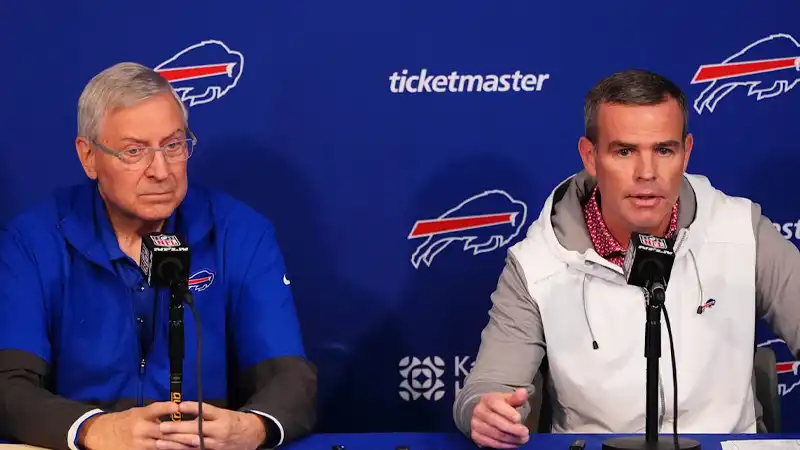
At the press conference on January 21, owner Terry Pegula described entering the locker room after the Broncos’ loss, seeing quarterback Josh Allen crying, and using that moment as part of the justification for a coaching change.
That kind of detail might feel authentic, but it also blurs lines. Fans and media immediately pivot to questions like: “So the decision was made in an emotional moment?” and “Was this about one game?” Once you invite that framing, you lose control of the narrative. The result is a story that reads less like decisive leadership and more like reactive decision-making.
Better approach: Lead with a crisp, repeatable rationale: the organizational goals, the performance standard, and why leadership believes a change is needed now. Emotion can be acknowledged, but it cannot be the basis for an argument.
2) The Bills “explained” the decision in a way that made it worse
The January 21 media session drew widespread criticism for being confusing and counterproductive, with comments going viral “for all the wrong reasons,” as multiple outlets summarized.
This is the classic crisis-comms trap: leadership feels pressure to answer everything, so they overtalk, improvise, and create new controversies. The moment becomes about the press conference, not the decision.
Better approach: Prepare three core messages, stick to them, and decline to litigate every subtopic. “We’re not going to relitigate player personnel decisions in public” is a complete sentence.
3) The Bills appeared to scapegoat people on the way out
One of the most damaging moments came when Pegula interjected to address criticism about the Bills’ wide receiver situation, specifically the 2024 selection of Keon Coleman, and suggested the coaching staff pushed for that pick more than GM Brandon Beane did.
Even if there is truth inside that explanation, saying it publicly at the first press conference after firing the head coach does two things:
- It reads like blame-shifting.
- It signals internal division.
In other words, it makes a termination look like a finger-pointing exercise rather than a strategic reset.
Better approach: Protect people as they leave. Avoid assigning fault. If accountability needs to be discussed, do it in systems terms: “We all share responsibility. We are changing the structure and process going forward.”
4) They muddied accountability by promoting the GM while firing the coach
The Bills retained and promoted Brandon Beane (reported to have increased his responsibilities and put him in charge of the coaching search) while firing McDermott. That combination can be defensible, but communications must anticipate the obvious question: “If the roster and strategy were the problem, why does the top roster-builder get elevated?”
Instead, the public discussion quickly shifted toward organizational credibility and governance, because the move appeared inconsistent with the implied diagnosis of what went wrong.
Better approach: If you keep one leader and remove another, explain the model. Clearly define who owns what outcomes and what will be different, structurally, this time.
5) The Bills created uncertainty for the next hire
Every leadership transition is also a recruiting pitch. The moment ownership appears erratic, overly emotional, or willing to publicly relitigate internal decisions, the job can look harder and the risk higher. Commentators openly suggested the press conference itself made the opportunity “less appealing” than it looked a few hours earlier.
Better approach: Communicate stability. Signal alignment. Demonstrate respect for outgoing leaders. Make it clear that the next coach will have defined authority, support, and a professional environment.
The Bottom Line: What you should learn from the Bills’ mistakes
If you want to avoid turning a difficult separation into a long-running PR problem, follow these rules:
- Decide internally, communicate externally. Alignment first, microphones second.
- One storyline. Keep it simple: why now, what changes, what happens next.
- No scapegoating. Protect the outgoing leader’s dignity; it protects yours too.
- Stay consistent. Promotions, restructures, and explanations must match.
- Show empathy without oversharing. Human moments matter, but they should not be your core justification.
- Prove stability. Your tone should make stakeholders feel confident, not anxious.
The Bills’ experience is a reminder that the mechanics of a leadership change are only half the battle. The other half is the story you tell. When that story becomes contradictory, emotional, or blame-driven, the public stops debating the decision and starts questioning the organization.
Need help? That’s what we are here for. Contact TCHQ Communications today at 502-209-7619.

You must be logged in to post a comment.