Article Read Time

Artificial Intelligence, or AI for business, is just a tool. Like any tool, if you use it right, it helps, but if you use it wrong, you create more problems.
A friend of mine is job hunting right now. He sent me a cover letter last week and asked what I thought.
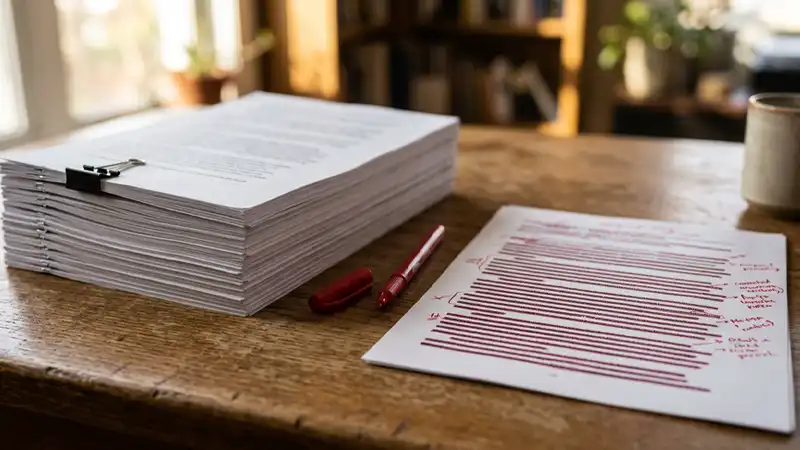
It ran three full pages. Clean sentences, no typos, confident all the way through. It also never told the employer how he’d help them do the thing they exist to do.
I told him to cut it to one page and focus more on the employer. He said AI said it was right.
The AI didn’t fail him. It gave him exactly what he asked for.
That part should stick with you, because this isn’t only a job search problem. The same failure is showing up in proposals, pitch emails, mission statements, and pricing pages.
Why the AI for Business Keeps Saying Yes
These AI for business tools get tuned on human ratings. People score agreement and encouragement higher than pushback, so the model rewards agreeableness during training. The model learns that a pleased user is a good outcome.
Then you type your question and tip the scale further.
“Does this cover letter sound strong?” already tells it which answer you want. So does “is 200 dollars too much to charge for this,” when your hope is sitting right there in the wording.
Two things stack. A built-in lean toward telling you what you want to hear, and your own framing pointing at which answer that is.
What It Looks Like at Your Desk
You ask AI for business if the new tagline works. It works. You ask if three pages is too long. Not if the content earns it, apparently. You ask whether to raise prices, and it builds you a tidy case for raising prices.
None of that’s lying. It’s a machine built to be helpful, and somewhere along the way helpful got defined as agreeable.
The damage is quiet. You don’t get obviously bad advice that you can spot and throw out. You get a confident yes on a decision that needed an actual second opinion.
Try it on a proposal and watch the same thing happen. You lean on your process because it’s the part you’re proud of. You ask the AI to tighten it up, and it tightens it up beautifully.
What it doesn’t ask is why the client should care about your process. It doesn’t ask whether that client already got burned by a vendor who wrote four pages about process and then missed the deadline.
Same failure as the cover letter, different document. Pages about you, and nothing about them.
Ask So That Agreeing With You Means Arguing With You
Better questions to AI for business do more here than better tools.
Ask for the strongest case against your idea: what would have to be true for you to be wrong, and what a skeptical customer would say after reading your page.
Hand it to the other person. My friend’s letter got sharper the moment he stopped asking, “Is this good?” and started asking what a hiring manager at that nonprofit needs to see in the first ten seconds.
Then ask it to cut. AI is great at producing more and terrible at knowing when to stop. Tell it to get you to 250 words, and it has to decide what actually mattered.
One more habit to build. Ask the same question twice, once framed your way and once framed against you, then compare the two answers. The gap between them is the size of the flattery.
You Still Own the Judgment
None of that helps if you can’t tell a strong draft from a polished one.
AI writes clean sentences about your business. It’s never met your customers, walked your street, or handled your reputation after a rough week. It doesn’t know that half your work comes from one referral source who hates being cc’d.
So use it for the first draft, the outline, the rewrite you’ve been avoiding since March. Keep the final call for yourself.
And get suspicious of a yes that arrives too easily.
The Bottom Line on Using AI for Business Well
AI is fast, tireless, and agreeable. Agreeable is the part to watch.
If it never tells you no, you’re not getting a second opinion. You’re getting a mirror with better grammar.
Ready for a second opinion from someone who’ll tell you when it isn’t working? Give us a call at 502-209-7619. No pitch, no pressure, just a real conversation.


You must be logged in to post a comment.