
Article Read Time

In most cases, a business plan gets written once, printed once, and filed forever.
Somebody needed a loan, so they built the plan for the banker. Forty pages, a cover sheet, projections out to 2031. The loan came through. The plan went in a drawer next to the manual for a microwave you no longer own.
December is National Write a Business Plan Month, and I have a modest proposal. Write one you’ll open again.
Why Bother Writing a Business Plan Down?
Plenty of successful business plans started on a napkin. You’ve heard those stories. You’ve probably told one.
The research leans the other way, though. A team from the University of Edinburgh Business School and RWTH Aachen tracked more than 1,000 would-be U.S. entrepreneurs over six years. The ones who wrote formal plans were 16% more likely to reach a viable business.
Sixteen percent won’t guarantee anything. When margins are thin, though, it’s a real edge.
The bigger payoff happens before anyone else reads a word. Writing forces you to answer the questions you’ve been dodging. What does it cost to land one customer? What happens if your biggest client walks? Who, exactly, are you selling to?
You can wing a lot of things in business. Those three aren’t on the list.
Pick the Right Size Plan
The SBA says plainly that no single business plan format is correct. It describes two common types.
A traditional plan is the long one. Executive summary, market analysis, operations, management, financials. Lenders and investors still ask for it, so if you’re borrowing money, you’ll need this version.
A lean plan fits on a page or two. It covers your customers, what you offer them, your costs, your revenue, and the handful of activities that keep the doors open. It’s built to change as you learn.
Most small businesses and nonprofits I work with need the lean version for daily use. Build the traditional one when the bank asks, and pull from your lean plan to write it.
The Marketing Section Is Where Plans Go Soft
I read a lot of business plans. The financials are usually careful. Operations is usually solid.
Then you hit marketing, and the whole thing goes vague.
“Our target market is everyone.” “We’ll use social media.” “Word of mouth will drive growth.”
Those are hopes with a nice font.
A real marketing section answers four questions in plain language.
Who is your customer, specifically? Give them an age range, a zip code, and a problem that keeps them up at night. A Frankfort bakery might write “state workers buying for office birthdays.” That’s a person you can find.
Where do they already spend their attention? Facebook groups, the Saturday farmers market, the church bulletin, the radio station they leave on at work. Go where they are.
What will it cost to reach them? Put a dollar figure on it, even a rough one. Social media is free right up until it eats ten hours of your week.
How will you know it’s working? Pick one or two numbers you’ll check every month. Calls, bookings, email signups, foot traffic on a slow Tuesday.
Answer those four and your marketing section is ahead of most I see.
Keep It Where You’ll See It
A business plan you never look at can’t steer anything.
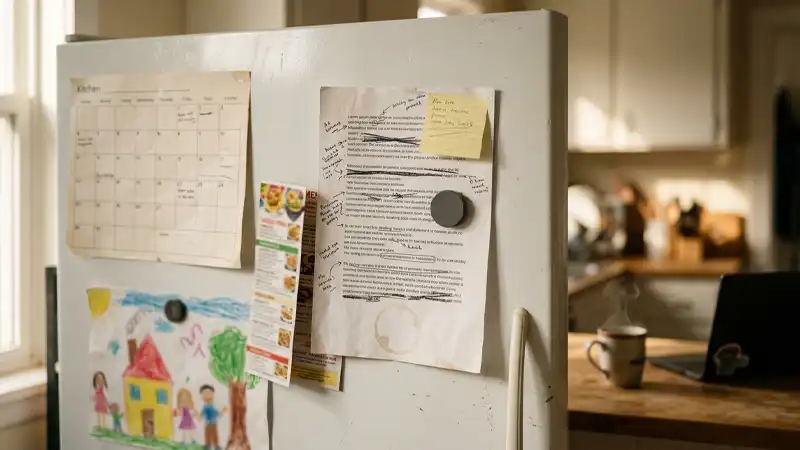
Put the one-page version somewhere obvious. Pin it above your desk. Make it the first file in your shared drive. Stick it on the fridge if you run things from the kitchen table, and plenty of you do.
Then set a recurring reminder. Once a quarter, sit with it for an hour. What changed? Did you guess wrong? What worked better than you expected?
Update it. Cross things out. Scribble in the margins. A marked-up plan beats a pristine one every time, because the ink means you’re paying attention.
You Don’t Have to Do This Alone
Kentucky has free help for exactly this. The Kentucky Small Business Development Center offers no-cost, confidential coaching on business planning and marketing, with offices statewide. SCORE pairs owners with volunteer mentors who’ve run businesses themselves. The SBA’s website walks through both plan formats step by step.
Use them. That help is already paid for, and it’s good.
The Bottom Line on a Business Plan
December is a smart month for this. The year is winding down, you’ve got twelve months of real numbers in front of you, and January is close enough to feel.
Write the business plan. Keep it short enough to reread. Make the marketing section specific enough that a stranger could act on it.
Then take it out of the drawer and put it somewhere you’ll trip over it.
Want a second set of eyes on your marketing plan before January? Give us a call at 502-209-7619. No pitch, no pressure, just a real conversation.



You must be logged in to post a comment.